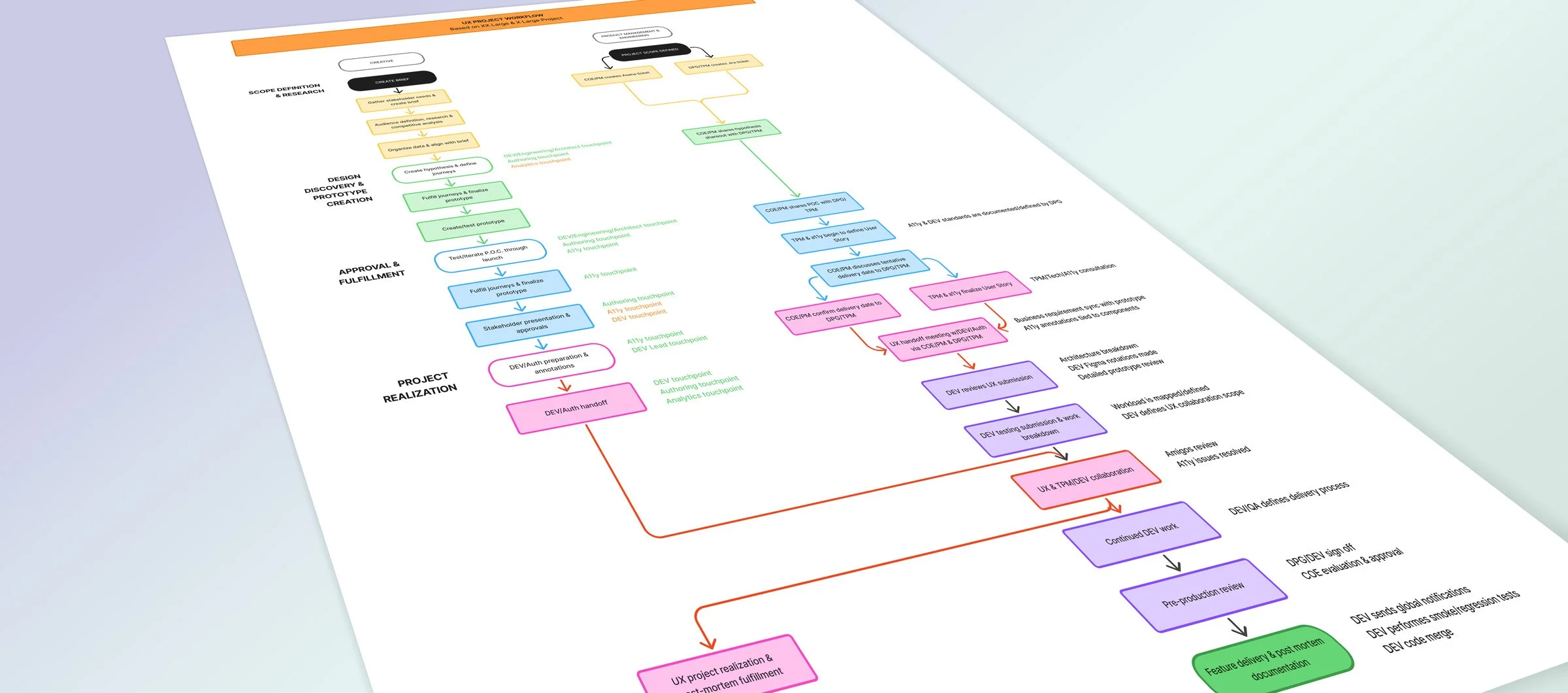
Cross-functional Project Workflow
-
Growing Demand, Limited Delivery Capacity
The UX department lacked established governance and standardized workflows, relying on stakeholder availability and deadlines to guide project delivery. As annual business unit requests increased, inefficient processes created bottlenecks, slowing turnaround times and limiting the department’s ability to meet growing demand.
-
Establishing Structure & Accountability
I led the effort to establish a structured project management framework, building upon existing workflows in Asana. Through cross-functional collaboration, I identified process gaps, clarified departmental responsibilities, and defined key approval checkpoints to improve accountability, consistency, and project delivery.
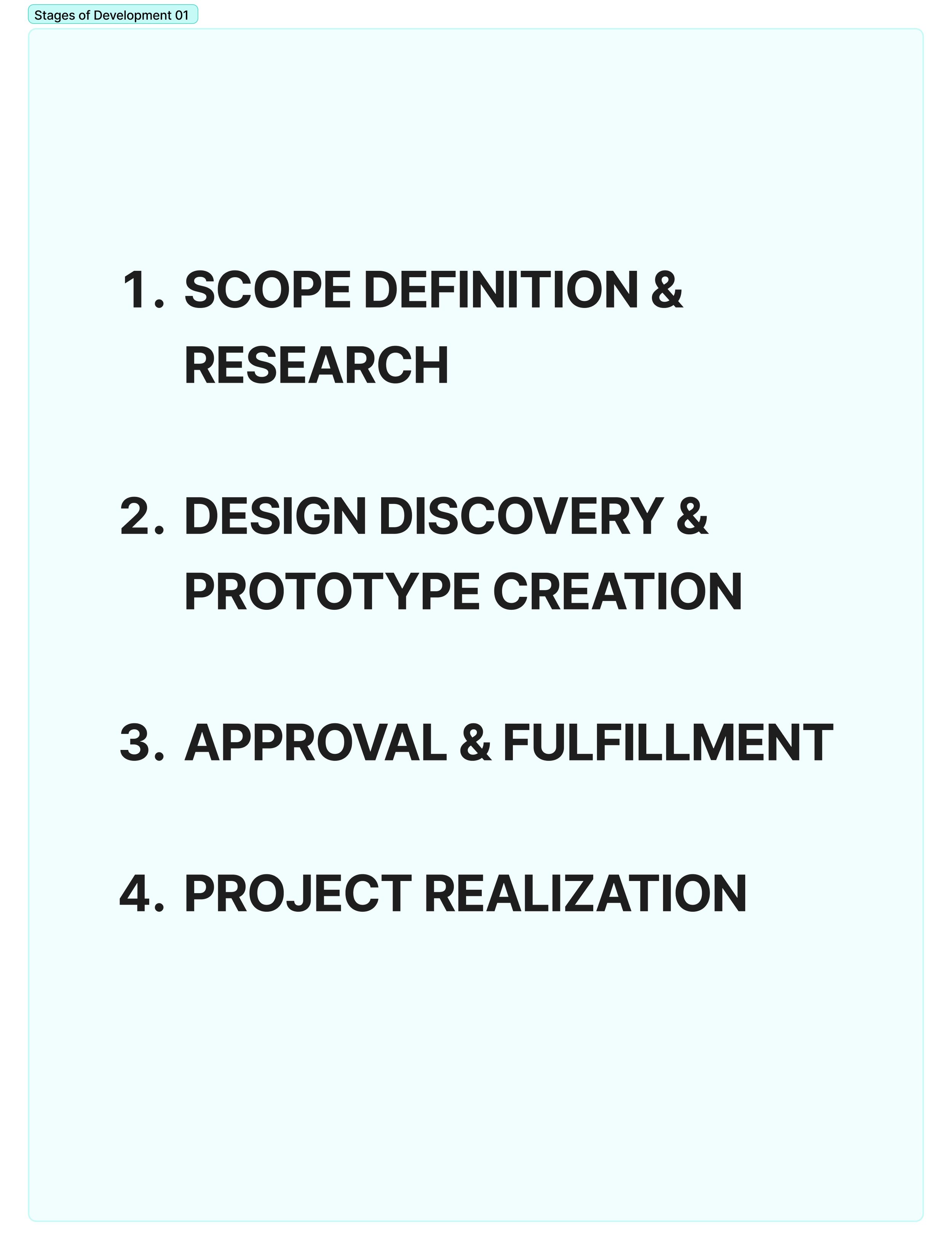
Stages of development:
Stage 01/05
Undefined Responsibilities: Unclear ownership and accountability across project stages.
Inconsistent Expectations: Broadly defined workflows created ambiguity in deliverables.
Unstructured Timelines: Loosely managed deadlines reduced delivery predictability.
Approval Bottlenecks: Inefficient decision-making prolonged approval cycles.
Limited Governance: Lack of standardized processes hindered coordination and efficiency.
Stage 02/05
Scalable Framework: Established a structured UX process adaptable across projects.
Defined Project Stages: Standardized measurable, repeatable workflows.
Predictable Delivery: Improved consistency in project planning and execution.
Clear Expectations: Established defined responsibilities and deliverables.
Cross-Functional Alignment: Strengthened coordination from project initiation through completion.
Stage 03/05
Cross-Functional Collaboration: Established critical touchpoints across departments.
Multidisciplinary Feedback: Integrated accessibility, engineering, development, authoring, and analytics expertise.
Requirements Validation: Identified technical constraints and feasibility concerns early.
Stakeholder Alignment: Improved communication and expectations at key decision points.
Delivery Efficiency: Streamlined approvals and coordination within an agile-hybrid framework.
Stage 04/05
Cross-Functional Leadership: Spearheaded collaboration across UX, development, engineering, and product teams.
Breaking Down Silos: Established previously absent communication channels between departments.
Strategic Alignment: Led efforts to improve project visibility, scope definition, and shared accountability.
Resource & Delivery Planning: Drove improvements in workload coordination and timeline forecasting.
Measurable Business Impact: Helped drive a 15% increase in annual project throughput through stronger cross-functional alignment.
Scaling Workflow
I expanded the original UX workflow into four scalable models, aligning project activities with varying levels of scope and complexity. This approach gave Product Management a consistent framework for estimating UX effort, allocating resources, and forecasting timelines. By selectively streamlining activities for smaller projects, I established a more adaptable delivery process without compromising quality or critical oversight.
Project Planning & Estimation
Established four project classifications based on scope and complexity.
Defined proportional time allocations across key UX stages.
Improved forecasting of resources, workload, and delivery timelines.
Workflow Adaptability & Efficiency
Scaled research, design, and validation activities to project requirements.
Consolidated or eliminated unnecessary steps while preserving essential checkpoints.
Maintained consistent cross-functional alignment and quality standards across project sizes.